The Orlando Home Buying Process Step by Step
Buying a home in Orlando takes about 75 to 90 days from first serious search to closing day. That's the realistic timeline. The median days to pending is 43 as of February 2026, and closing after going under contract typically adds another 30 to 45 days. Florida's process has some important differences from other states, particularly around title companies, documentary stamp taxes, and insurance requirements. This guide walks through every step so nothing catches you off guard.
How Do You Get Pre-Approved for a Mortgage in Orlando?
Start with mortgage pre-approval before you tour a single home. In Orlando's current market, sellers and listing agents want to see a pre-approval letter with every offer. Without one, your offer goes to the bottom of the pile.
What you'll need: Two years of tax returns, two months of bank statements, recent pay stubs, and a valid ID. Self-employed buyers need profit and loss statements and should plan for extra underwriting time.
What to expect in 2026: Interest rates are running 6.5% to 7%. On a $400K home with 10% down, that's roughly $2,330 to $2,400 per month in principal and interest alone. Your lender will factor in property taxes (about 0.89% in Orange County), homeowners insurance, and HOA/CDD fees to determine your maximum approval.
Common loan types in Orlando: Conventional (5% to 20% down) is the most common for the $300K to $700K range. FHA (3.5% down) works for first-time buyers but some HOA communities don't accept it. VA (0% down) is popular given Orlando's military population and carries no PMI. Jumbo loans apply for higher-priced homes in Windermere and Winter Park.
Get pre-approved with a local lender who understands Florida closing timelines. Out-of-state lenders sometimes cause delays because they're unfamiliar with Florida's title and escrow process.
How Do You Find the Right Home in Orlando?
Once you're pre-approved, the search begins. In Orlando's February 2026 market, there are thousands of active listings and 12.4% of sales are going above list price, which means some homes are still competitive while others sit.
Working with an agent: Your buyer's agent costs you nothing out of pocket in most transactions. A good agent sets up automated MLS searches, previews homes before you waste a Saturday, and advises on neighborhood-specific pricing. At SERHANT. Orlando, we cover everything from Windermere and Dr. Phillips to Lake Nona, Winter Garden, and Celebration.
What to prioritize: School zones (check boundary maps, not proximity), flood zone status (FEMA maps are free), roof age (directly impacts insurance cost), and HOA/CDD fees (these affect your monthly budget permanently).
New construction vs. resale: Builders are offering rate buydowns, closing cost credits, and design center upgrades in 2026. If you go new build in Horizon West or Winter Garden, bring your own agent. The builder's sales rep works for the builder, not you.
How Do You Make an Offer on a Home in Orlando?
Your offer should be based on comparable sales, not the listing price. In a market where the median sale-to-list ratio is around 96.7% in Winter Park and 97% in Winter Garden, most buyers are negotiating below asking.
What goes into your offer:
-
Purchase price: Based on comps, condition, and days on market. A home that's been sitting 60+ days has more negotiating room than one listed last week.
-
Earnest money deposit (EMD): Typically 1% to 3% of the purchase price in Orlando. This is held in escrow by the title company and applied to your closing costs at the end.
-
Financing contingency: Protects you if your loan falls through.
-
Inspection contingency: 10 to 15 days (negotiable) to inspect and request repairs or credits.
-
Closing date: Usually 30 to 45 days from contract execution. Cash buyers can close in 14 to 21 days.
Negotiation leverage in 2026: Values are down 3.8% year over year. Only 12.4% of homes sell above list price. Most sellers are flexible on price, closing costs, or repair credits. Use that leverage, but don't lowball so aggressively that you lose the home.
What Happens During the Inspection Period?
The home inspection is your due diligence window, and in Florida, it's where you uncover the issues that matter most for long-term ownership costs.
Standard home inspection: A licensed inspector evaluates the structure, roof, HVAC, plumbing, electrical, and major systems. Cost: $350 to $550 for a typical single-family home in Orlando.
4-point inspection: Required by most insurance companies for homes over 20 years old. This examines the roof, electrical, plumbing, and HVAC. If any of these systems are original, expect your insurance premium to be significantly higher. Cost: $100 to $175.
Wind mitigation inspection: Documents hurricane-resistant features of the home (roof-to-wall connections, roof shape, opening protection). A good wind mitigation report can save you 15% to 40% on your insurance premium. Every buyer in Florida should get one. Cost: $75 to $150.
Other inspections to consider: Termite/WDO inspections are standard in Florida and many lenders require them. Sewer scopes matter for older homes in Winter Park and Baldwin Park where cast iron pipes are common. Pool inspections are wise if the home has one.
After the inspection: You can negotiate repairs, request seller credits, or walk away during the contingency period. In today's market, asking for credits toward closing costs is often more effective than requesting specific repairs.
How Does the Title and Closing Process Work in Florida?
Florida is a title company state, not an attorney state. The title company handles the closing, manages escrow, and issues title insurance. This is one of the biggest differences buyers from the Northeast or Midwest will notice.
Title search: The title company searches public records to confirm clear ownership with no liens or encumbrances. This takes 1 to 2 weeks.
Title insurance: Two policies exist. The lender's policy protects your mortgage company (required if financing). The owner's policy protects you. In Florida, the seller customarily pays for the owner's policy in most Central Florida counties. Confirm this in your contract.
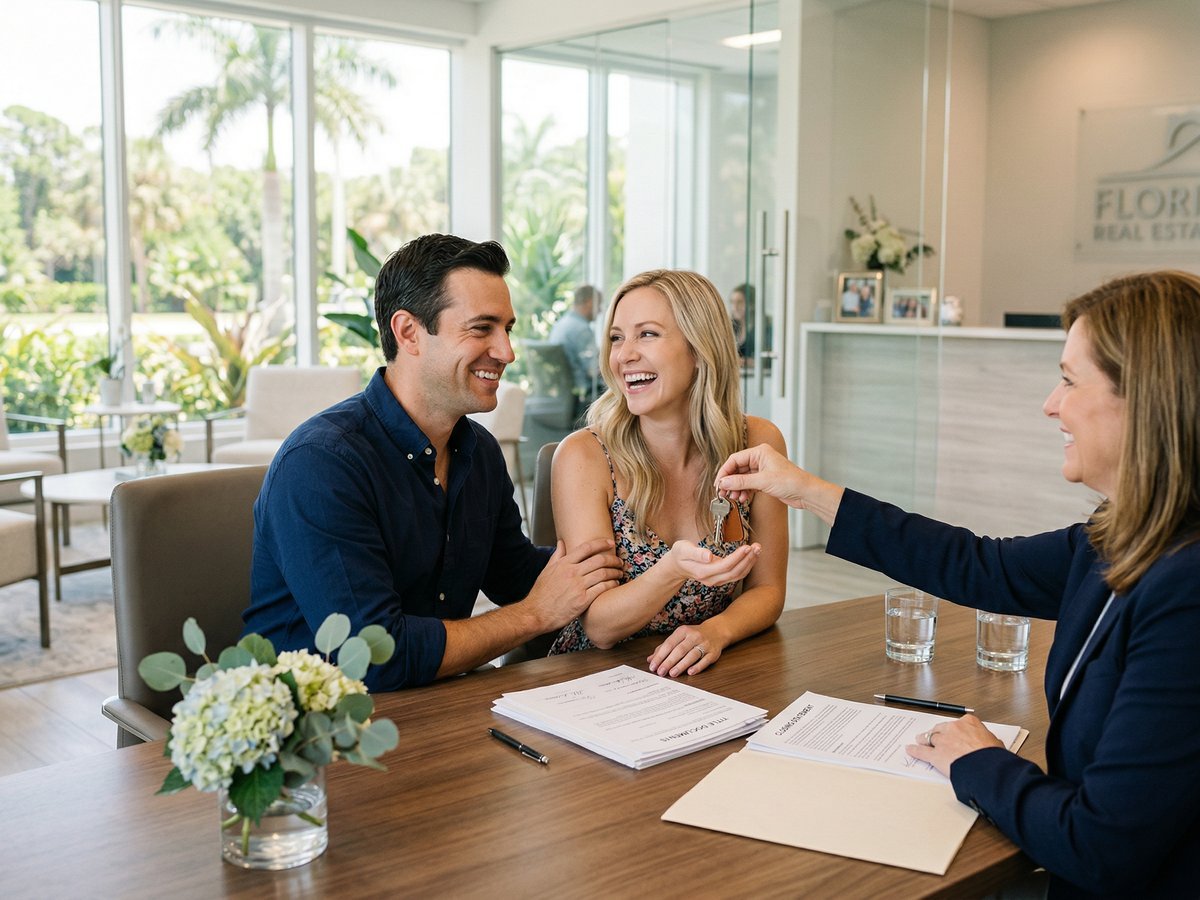
The closing itself: You close at the title company's office, sign mortgage documents, and the deed gets recorded with the county. Mobile notary and remote online notarization are also available.
What Are the Florida-Specific Closing Costs Buyers Need to Know?
Florida has several taxes and fees that buyers from other states might not expect. Budget 2% to 4% of the purchase price for total closing costs.
Documentary stamp tax on the mortgage: Florida charges $0.35 per $100 of the mortgage amount. On a $400K mortgage, that's $1,400. This is paid by the buyer at closing.
Intangible tax on the mortgage: A one-time tax of $2.00 per $1,000 of the mortgage amount (0.2%). On a $400K mortgage, that's $800. Also paid by the buyer.
Documentary stamp tax on the deed: $0.70 per $100 of the sale price. On a $500K purchase, that's $3,500. In most Orlando-area contracts, the seller pays this. But it's negotiable, so read your contract.
Recording fees: Charged by the county clerk's office to record the deed and mortgage. Typically $100 to $200.
Prepaid costs and escrows: Your lender will require prepaid property taxes (usually 3 to 6 months in escrow), prepaid homeowners insurance (full first year plus 2 to 3 months escrow), and prepaid interest from the closing date to the end of the month.
Example for a $500K purchase with $450K mortgage: Documentary stamp tax on mortgage ($1,575), intangible tax ($900), title and settlement fees ($750 to $1,450), appraisal ($500 to $700), inspections ($500 to $900), prepaids and escrows ($3,200 to $6,500). Total buyer closing costs: approximately $10,000 to $18,000, excluding down payment.
What Is the Timeline From Search to Closing?
Here's the realistic timeline for buying a home in Orlando in 2026.
Weeks 1 to 2: Get fully pre-approved (not just pre-qualified). Set up automated searches with your agent.
Weeks 2 to 6: Tour homes and narrow your focus. With median days to pending at 43, good homes still move. Don't wait weeks to decide on a home you like.
Weeks 6 to 7: Submit your offer, negotiate terms, and execute the contract. Earnest money deposit is due within 3 days of contract execution.
Weeks 7 to 9: Schedule inspections within the first week. Review HOA documents, CDD disclosures, and insurance quotes. Negotiate repairs or credits if issues arise.
Weeks 9 to 11: Your lender orders the appraisal and the underwriter reviews your file. Respond to document requests immediately. Delays here are the number one cause of closing delays.
Weeks 11 to 12: The title company prepares the closing disclosure (you receive it at least 3 business days before closing). Wire your funds to the title company. Verify wiring instructions by phone, never by email alone. Wire fraud is common. Sign, record, and get your keys.
What Should New Florida Residents Know About Homestead Exemption?
File for homestead exemption immediately after closing. The deadline is March 1 of the year following your purchase, but the Orange County Property Appraiser allows early filing.
Homestead exemption reduces your assessed value by up to $50,000, saving roughly $450 per year in property taxes. More importantly, it caps annual assessment increases at 3% (the Save Our Homes provision), protecting you from major tax jumps. You'll need a Florida driver's license, vehicle registration, and voter registration or declaration of domicile.
FAQ
How much are closing costs for a buyer in Orlando?
Buyers should budget 2% to 4% of the purchase price. On a $500K home, that's $10,000 to $20,000, which includes lender fees, title insurance, documentary stamp tax, intangible tax, prepaid taxes, and insurance escrows.
How long does it take to close on a home in Orlando?
From accepted offer to closing, expect 30 to 45 days with financing. Cash purchases can close in 14 to 21 days. The median days to pending is 43 as of February 2026, so the full process from search to keys is typically 75 to 90 days.
Does the buyer or seller pay closing costs in Florida?
Both pay, but different ones. Buyers pay documentary stamps on the mortgage, intangible tax, lender fees, inspections, and prepaids. Sellers customarily pay documentary stamps on the deed and the owner's title insurance policy. Some costs are negotiable.
What is a 4-point inspection in Florida?
It evaluates the roof, electrical, plumbing, and HVAC systems. Insurance companies require it for homes over 20 years old. The results directly impact your premium and whether you can get coverage at all. Cost is $100 to $175.
Do I need a real estate attorney to buy a home in Florida?
Florida does not require one for residential purchases. Title companies handle the closing. However, hiring an attorney for contract review makes sense for complex transactions or estate purchases.