Moving to Orlando: How to Choose the Right Area
The best area for you depends on what your daily life actually looks like. Not every Orlando suburb is the same, and picking the wrong one can mean an extra 45 minutes in the car every morning or a neighborhood that doesn't match how you live. With the metro median home price sitting at $399,990 as of February 2026 and values down 3.8% year over year, buyers have more leverage than they've had in years. That makes this the right time to be strategic about where you land.
I've helped hundreds of buyers relocate to Orlando over the past several years. The number one mistake I see? People pick a house before they pick a lifestyle. This guide breaks it down by how you actually live, what you can spend, and how long you're willing to sit in traffic.
What Are the Best Orlando Neighborhoods for Families?
Families moving to Orlando should focus on three areas: Winter Garden, Lake Nona, and Horizon West. Each one offers A-rated schools, master-planned communities, and the kind of infrastructure families need.
Winter Garden is the most established of the three. The median sale price runs around $560K, with single-family homes ranging from the low $400s for older inventory to $700K+ for newer builds in communities like Lakeshore and Waterleigh. The elementary and middle schools in the West Orange district consistently rate among the top in the state. Downtown Winter Garden's Plant Street corridor gives you a walkable town center with restaurants, a farmers market, and the West Orange Trail.
Lake Nona is Orlando's medical and tech hub. Average home values sit around $604K in Lake Nona Central, with townhomes starting in the mid-$300s and single-family homes from the mid-$400s up. Lake Nona has its own schools, USTA training campus, and a growing Town Center. If one spouse works in healthcare, biotech, or at Orlando International Airport, Lake Nona cuts the commute dramatically.
Horizon West is the fastest-growing area in all of Central Florida. The median sale price is around $580K, with new construction from national builders starting in the low $400s for townhomes and low $500s for single-family. It's newer, so the retail and dining infrastructure is still catching up. But the value per square foot is hard to beat.
Which Orlando Neighborhoods Are Best for Walkability and Urban Living?
Downtown Orlando, Baldwin Park, and Winter Park are the top picks for buyers who want to walk to restaurants, coffee shops, and local businesses.
Downtown Orlando is the most affordable urban option. Condos in the 32801 zip code list around $300K to $350K for a two-bedroom, with price per square foot around $310. You get Lake Eola, Thornton Park, and easy access to SunRail. The tradeoff: limited single-family inventory, and you're buying a condo lifestyle with HOA fees typically running $300 to $500 per month.
Baldwin Park is the best of both worlds. It's a planned urban village about 10 minutes east of downtown with tree-lined streets, a town center, and a mix of condos, townhomes, and single-family homes. Average home values are around $752K, which puts it firmly in the upper tier. But the walkability and community feel justify the premium for the right buyer.
Winter Park offers Park Avenue shopping, Rollins College, and some of the most beautiful tree canopy streets in Florida. The average home value is $458K, but that's skewed by condos and smaller homes. Single-family homes on desirable streets regularly trade between $600K and $1.2M. Median days to pending in Winter Park is just 34 days, so well-priced homes move fast here.
Where Should Luxury and Golf Buyers Look in Orlando?
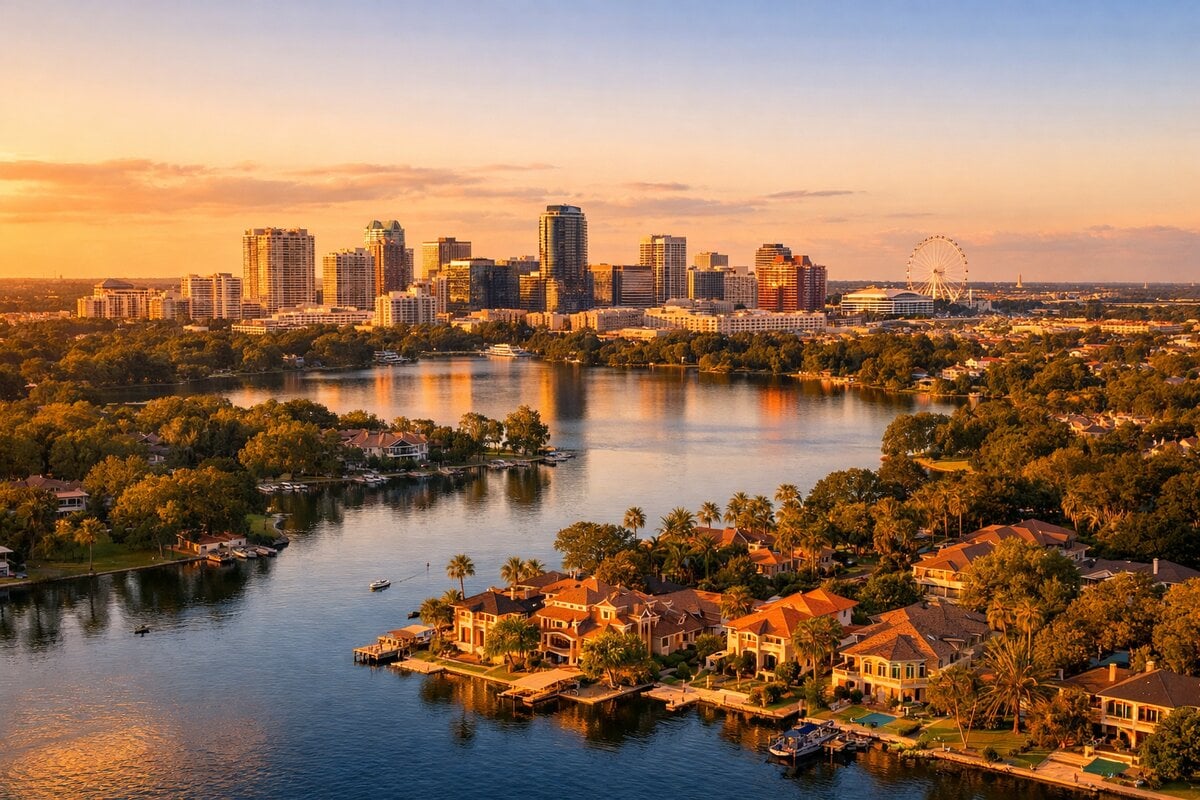
Windermere and the surrounding lake chain corridor is Orlando's premier luxury market. Median home prices range from $900K to $1.3M depending on the month, with waterfront and golf community properties regularly exceeding $3M.
Isleworth is the crown jewel. Gated, private golf club, and lakefront estates that start around $2M and go well past $10M. This is where you'll find PGA Tour players and Fortune 500 executives.
Windermere proper has a wider range. Entry-level luxury starts around $800K for 4-bedroom homes on interior lots, while lakefront properties on the Butler Chain command $2M to $5M+. Days on market for entry luxury runs 45 to 60 days. Ultra-luxury above $3M can sit 90 to 180 days.
Dr. Phillips is another strong option for the luxury buyer who wants to be closer to Restaurant Row and the attractions corridor. Average home values are around $527K, but the gated communities like Bay Hill (home of the Arnold Palmer Invitational) push well above $1M. Dr. Phillips also offers some of the best international dining in Central Florida.
How Do Commute Times Work in Orlando?
Orlando commutes revolve around I-4 and the 408/417 toll roads. The average metro commute is about 28 minutes, but that number hides a lot of variation.
If you work downtown: Winter Park is 10 to 15 minutes. Baldwin Park is 10 minutes. Dr. Phillips is 20 to 25 minutes via I-4. Winter Garden is 30 to 40 minutes on a good day, longer during I-4 construction delays. Lake Nona is 25 to 30 minutes via 417.
If you work near the theme parks (International Drive, attractions corridor): Dr. Phillips and Windermere are 10 to 15 minutes. Celebration is 15 to 20 minutes. Winter Garden is 25 to 30 minutes. Lake Nona is 30 to 40 minutes.
If you work at Orlando International Airport or Medical City: Lake Nona is 10 minutes. Celebration is 15 to 20 minutes. Everything else is 25 to 40 minutes depending on time of day.
Remote workers have the most flexibility. Winter Garden, Horizon West, and Celebration offer the best value per square foot for buyers who don't need to commute daily.
What Can You Buy at Each Budget Level in Orlando?
Your budget determines your neighborhood more than anything else. Here's the honest breakdown for 2026.
$300K and under: Condos in downtown Orlando, older townhomes in east Orlando, or small single-family homes in less established areas. At this price, you're typically looking at 1,000 to 1,400 square feet. This is also where investor-heavy areas appear, so pay attention to owner-occupancy ratios.
$400K to $500K: This is the sweet spot for first-time buyers. You can get a 3-bedroom, 1,600 to 2,000 square foot home in Lake Nona (townhome or older single-family), a renovated home in Horizon West, or a smaller home in Winter Park's Goldenrod area. Property taxes on a $450K home in Orange County run about $4,000 per year before homestead exemption.
$500K to $800K: The most competitive bracket. New construction in Winter Garden, updated family homes in Dr. Phillips, single-family homes in Lake Nona, and entry-level Baldwin Park. You'll get 2,000 to 3,000 square feet with modern finishes. Budget $3,000 to $6,000 per year for homeowners insurance and $170 to $300 per month for HOA in master-planned communities.
$800K to $1M+: Windermere entry luxury, premium Winter Park locations, lakefront in Baldwin Park, custom homes in Celebration. At this tier, you're choosing between older character homes with larger lots and newer builds with upgraded finishes.
$1M+: Windermere lakefront, Isleworth, Bay Hill, and the top-tier custom builds in Lake Nona's estate sections. Many buyers at this level pay cash, which simplifies the process considerably.
What About Property Taxes and Insurance Costs?
Florida has no state income tax, which is a major draw for relocating buyers. Property taxes in Orange County run about 0.89% effective rate, so a $500K home costs roughly $4,450 per year. The homestead exemption knocks up to $50,000 off the assessed value for your primary residence, which saves roughly $450 a year.
Homeowners insurance is the bigger surprise for most buyers. The Florida average annual premium is $8,292 as of the most recent data, though reforms are starting to bring some relief. Budget $3,000 to $8,000+ per year depending on the age of the home, roof condition, and location. Flood insurance is separate and may be required depending on the zone. Always get insurance quotes before you go under contract.
FAQ
What is the median home price in Orlando in 2026?
The metro median home sale price is $399,990 as of February 2026, with average home values at $370,828. Values are down 3.8% year over year, which gives buyers more room to negotiate.
How long does it take to buy a home in Orlando?
The median time from listing to pending contract is 43 days in the Orlando metro as of February 2026. From there, closing typically takes another 30 to 45 days, depending on financing.
Is Orlando a good place to buy a home in 2026?
Yes. With values down 3.8% year over year and inventory up across most neighborhoods, 2026 is a buyer-favorable market. Interest rates in the 6.5% to 7% range still impact affordability, but price corrections and builder incentives help offset that.
Do I need flood insurance in Orlando?
It depends on the flood zone. Many Orlando neighborhoods are not in high-risk flood zones, but some areas near lakes or wetlands require it. Your lender will determine whether it's mandatory based on FEMA maps. Even if it's not required, it's worth considering.
What are CDD fees and how do they affect my payment?
Community Development District (CDD) fees are common in Orlando's newer master-planned communities. They fund infrastructure like roads, parks, and utilities. CDD fees are separate from HOA dues and appear on your property tax bill. They typically add $1,500 to $4,000 per year and are not optional.